What Happens to a Real Estate Listing Call After Hours
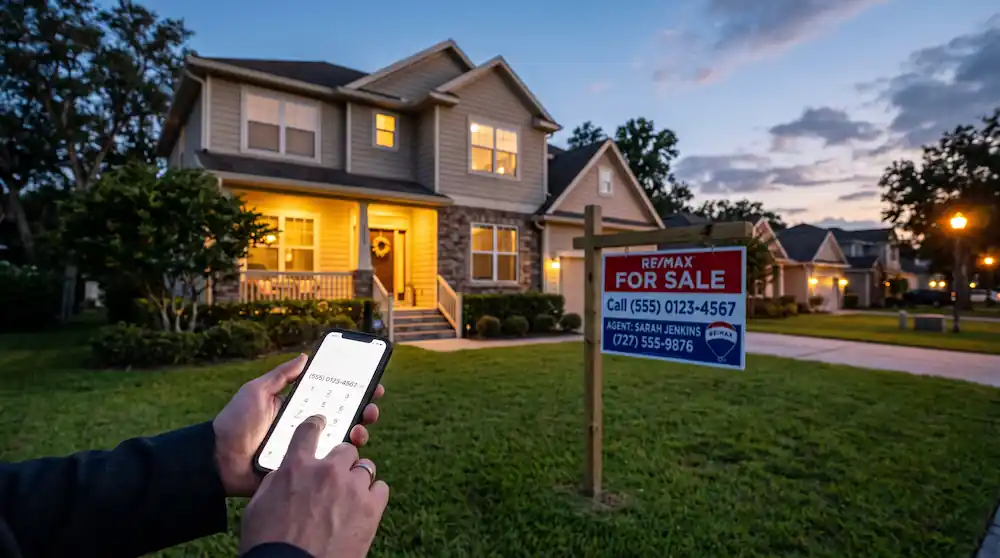
The call that is worth a commission does not arrive during office hours. It arrives at 8pm on a Sunday, from a couple who drove past the sign twice and finally pulled over. It arrives from a relocation buyer two time zones away who is working through a list. It arrives while you are hosting an open house with your phone face down on the kitchen island. Real estate is the one business where the most valuable calls are the ones you are least able to take, and most agents have never sat down and decided what should happen to them.
This is that decision, laid out plainly: what a listing call can go to when you cannot answer it, what each option actually does with the caller, and what it costs.
What the buyer does when nobody answers
They do not leave a voicemail. Almost nobody under fifty does, and a buyer with a list has no reason to. They tap the next listing. The agent who answers, or whose number does something useful when they cannot, gets the showing, and very often gets the buyer. Speed to a live answer is the whole game on a sign call, and it has nothing to do with how good an agent you are the next morning.
So the question is not "should I answer more calls." You cannot answer calls at 8pm on a Sunday and also have a life. The question is what answers when you do not.
Option one: voicemail
Voicemail is free and it is where sign calls go to die. The greeting is generic, the caller has to want you specifically to bother, and by the time you call back on Monday the couple has seen three other houses. If you take one thing from this article, take this: voicemail is not an after-hours plan for a listing line. It is the absence of one.
Option two: a human answering service
A virtual receptionist is a person in a call centre reading a script you gave them. They will pick up, take a name and a number, and promise you will call back. That is better than voicemail. It is also the same promise the buyer just got from the last agent's voicemail, delivered by a stranger who cannot say whether the house has a fenced yard or what the HOA fee is, because they have never seen the listing.
The cost shape is the other problem. Human services charge per call or per minute of a person's time, and listing calls cluster exactly when that time is dearest: evenings and weekends. The office that gets thirty sign calls a week pays for thirty conversations that mostly ended in "someone will get back to you."
The answering service cost comparison works through the arithmetic for a general small business. For real estate the gap is wider, because the calls are more concentrated and the value of answering well is higher.
Option three: a receptionist that has read the listing
An AI receptionist on your own Twilio or Telnyx number is a spoken, two-way voice conversation, not a menu. What makes it useful in this business is not that it talks; it is what it has read. You give it your listing pages, fliers and PDFs as a knowledge base, and it answers from those. Square footage, roof age, HOA, whether the appliances stay: the questions a buyer asks before they decide whether to see the place, answered while they are still standing at the sign.
Here is what a good setup does with four different callers on the same line, on a Sunday evening:
- The buyer who says the word "offer." A transfer rule rings you immediately, wherever you are. On Twilio it can ring the whole team at once; on Telnyx it dials one destination at a time. Either way, a caller with an offer never waits until Monday.
- The buyer who asks about the yard, the roof, the schools' distance. Answered from the listing, without waking anyone.
- The buyer who wants to see it. The receptionist checks your real Google Calendar and books the showing on it during the call, with travel time as the buffer so two showings across town are not stacked back to back.
- The agent calling to solicit, or the neighbour with a complaint. A message, and nothing else.
That routing is set up once per number, so a team line and an individual listing line can behave differently. The AI receptionist for real estate page walks through each of these rules with the actual settings.
The questions it must never answer
Fair housing rules apply to anything said on your behalf, and a system answering your listing line is speaking on your behalf. "Is the neighbourhood safe?" "What kind of people live on this street?" "Are there many families?" A human agent knows to step around those. A receptionist has to be told, in its configuration, which questions it declines and hands to you. That is a setup decision, and it is worth making before the first real caller rather than after. The solutions page has the list of what it answers freely and what it declines.
Business hours are the switch
None of this has to run all day. Business hours on the number decide what happens outside the times you set. During the day the receptionist can be the overflow that catches the call you miss in a showing; after hours it can be the entire front desk. A brokerage sets this per number, so the main line and an agent's listing line do not have to share a schedule.
And the buyer who texts instead
Roughly half the people who tap a number on a listing would rather text it. Those messages land in a shared inbox on the same number, where any agent on the team can see the thread and answer it. The AI add-on can draft the reply from the same listing knowledge base, for an agent to edit and send, or answer automatically if you turn that on.
Showings book by text as well. With booking by text switched on for the AI on that line, it checks the same live calendar, offers times that are actually free, and confirms the exact date and time before it writes anything. In Autopilot it books on the spot. In Draft mode it writes the reply as booked and holds it for an agent, who clicks Book & Send in the inbox and the showing goes on the calendar as the text goes out, after a fresh availability check.
What it costs a real estate office
Flat prices and a carrier bill. A core plan, which is the dashboard, inbox, routing, voicemail and business hours, starts at $19 a month. The AI receptionist is an add-on on top of that, from $19.99 a month, with tiers sized by minutes of AI conversation rather than by agent seats. A five-person team does not pay five times. Calls and texts themselves are billed by Twilio or Telnyx at their published rates, directly to you, with nothing added on top. Every tier and allowance is on the pricing page.
The add-on is not part of the free trial, because AI calls cost real money to run. The core plan is, for seven days.
What it will not fix
A receptionist that answers well does not rescue a listing that is priced wrong or photographed badly, and it does not make a slow agent fast on Monday morning. It also cannot text anyone from a number that has not completed A2P 10DLC registration, because the carrier filters unregistered messaging; that registration is yours to file, not ours. What it does is narrower and more valuable than it sounds: it makes sure the call at 8pm on a Sunday is answered by something that has read the listing and knows when to wake you.
If that is the problem you have, start with the real estate setup, or have us build it and confirm it with a test call before you point a sign at it.
Further reading: the four AI receptionists that come up for real estate on Twilio, compared on whether they answer the number on your signs.
Frequently asked questions
Do real estate agents need an answering service?
Agents need something other than voicemail on a listing line, because sign calls arrive in the evening and at weekends and buyers do not leave messages. A human answering service takes a message; an AI receptionist on your own number can answer property questions from the listing, book a showing on your calendar, and ring you only for the calls worth interrupting.
Can an AI receptionist answer questions about a specific listing?
Yes, if it has read the listing. TelBuddy's receptionist answers from a knowledge base you build from listing pages, fliers and PDFs, so square footage, HOA fees, roof age and what stays with the house are answered on the call rather than deferred to a callback.
Will an AI receptionist break fair housing rules?
Not if it is configured to decline the questions a human agent would step around, such as anything about who lives in the neighbourhood or whether it is safe. That is a setup decision made before the first caller, and the receptionist hands those questions to a person rather than answering them.
Can it book a showing?
Yes, on the phone and by text. It checks your connected Google Calendar for real availability and books the showing during the call, with travel time as the buffer. By text it offers free times, confirms the exact date and time, and books it, either on its own in Autopilot or with one click from an agent in Draft mode.
Business Hours Routing in TelBuddy
Route calls differently when you are open, closed or on holiday.